
FUNDED BY:

POWERED BY:

DICOM Samples
|
DICOM Library is a free online medical DICOM image or video file sharing service
for educational and scientific purposes.
|
|
STUDIES SHARED
by using Dicom Library
1
4
9
9
1
6
8
|
 |
|
By clicking Select DICOM file button You agree with our
Terms of Service
and the
Privacy Policy
ROADMAP NOTICE:
The personal account functionality will not be developed in the nearest future. Dicom Library’s team has made the decision to focus on the development of main Dicom Library features and improvement of its user experience.
DICOM Library USAGE
Select DICOM format image, video file or archived into a zip (*.zip) folder files (ZIP should contain only 1 study).
Do not upload files with information written on image!Service anonymize and only then upload files. It skips non DICOM format files. Uploaded files management is opened after successful upload - DICOM Study MANAGEMENT Panel. There you can share, download and delete files.
Watch video how to upload, view, share and download anonymized DICOM files online: DICOM files and DICOM file Tags listed in the Terms of Service will be automatically anonymized in the user's browser before uploading to the DICOM Library server. The user who uploads data is responsible for uploaded data and can upload DICOM files WITHOUT PERSONAL DATA located ON PICTURE, ON VIDEO, IN DICOM SR TEXT, IN DICOM PDF's or in any other Tags not listed as automatically anonymized (see the Terms of Service). The DICOM Library software intended for anonymization, sharing and viewing of DICOM files online complies with the requirements of the Regulation (EU) 2016/679 of the European Parliament and of the Council of 27 April 2016 on the protection of natural persons with regard to the processing of personal data and on the free movement of such data, and repealing Directive 95/46/EC (General Data Protection Regulation). Please note that:
|
News & UpdatesMedDream DICOM Viewer 8.7.0 is released! Date: 2025-06-12

The most important new features, new measurements, and improvements are described below: New features of viewing functionality:
Improved features:
News:
VIDEO of ONLINE WEBINAR: 'What’s new in MedDream v8.7.0?'. Date: 2025-07-22
Watch webinar's video recording:
Webinar was dedicated to MedDream DICOM Viewer v8.7.0 new release’s the most important features presentation and live demonstration. Agenda:
Python 2.7 Install Extra Quality TodayInstalling Python 2.7 today is an act of digital archaeology or pragmatic necessity. While the technical steps remain simple—downloading an old installer or tapping a legacy repository—the surrounding context has irrevocably changed. It serves as a reminder that software, like all technology, has a lifecycle. Python 2.7 was a titan of its era, but its installation now belongs in virtual machines, isolated containers, or the careful hands of those maintaining the long tail of legacy systems. For any new development, the lesson is clear: turn instead to Python 3, where the future is being written. pip install requests==2.25.1 Furthermore, SSL certificate handling in Python 2.7 is outdated, frequently causing urllib or pip to fail when connecting to modern HTTPS endpoints. Manual certificate updates or forcing insecure connections (strongly discouraged) become necessary evils. python 2.7 install Most Linux distributions have purged Python 2.7 from default repositories. On Ubuntu 20.04+, for example, apt install python2 will fail. Instead, users must add a "dead-snakes" PPA or compile from source. The recommended method is: Installing Python 2 Apple’s macOS shipped with Python 2.7 as a system dependency until Catalina (10.15). In Ventura and later, it is absent. Installing it now requires a third-party approach, most commonly via Homebrew: Python 2 sudo add-apt-repository ppa:deadsnakes/ppa sudo apt update sudo apt install python2.7 On RHEL/CentOS 8+, Python 2.7 is available through the powertools or epel repositories, but it is similarly deprecated. Compilation from source remains the universal, if time-consuming, fallback. brew install python@2 However, as of 2023, the official Homebrew formula for Python 2.7 has been removed from the core repository. Users must tap a third-party archive (e.g., brew tap newtd/python2 ). A safer method is using pyenv , a version manager: pyenv install 2.7.18 pyenv global 2.7.18 This isolates Python 2.7 from the system’s native Python 3, preventing conflicts with modern applications. DICOM Library users worldwide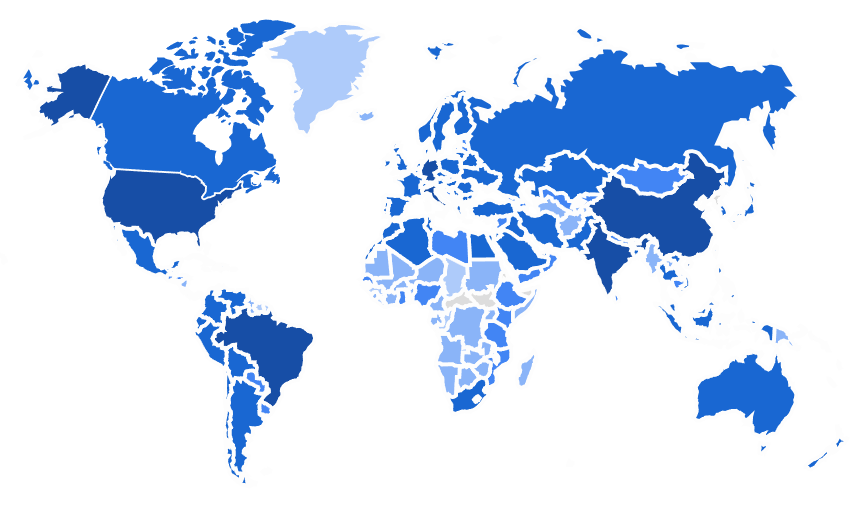
Last updated: 2025-05-29.
|
What can you upload?
You can upload DICOM file or files packed as zip.
Zip must contain DICOM files of studies, series and others.
How upload works?
Firstly test if it DICOM file or it will be skipped. Secondly try anonymize and then upload file to server. Same goes for zip file: try to extract and read file by file, test for DICOM format or skip, anonymize and upload. All extracting and anonymization is made on your browser.
Share?
You can share uploaded files via social networks: facebook, twitter and send by e-mail.
Anonymization?
At this point - deletes information about patient and attributes to identify a person in each DICOM file. Anonymization is done in your browser.
Do not upload files with information written on image!
Do not upload files with information written on image!