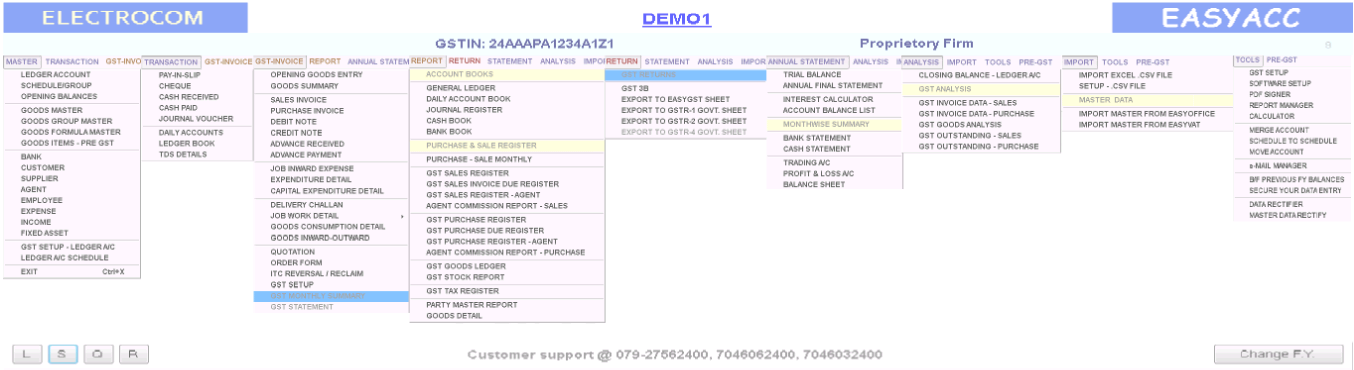
EasyACC - Easy, Effective & Efficient GST Ready Financial Accounting Software
Sheldon wants a world without loss—a lossless codec, a perfect equation, an unambiguous truth. But his father knows that the pops and scratches are not errors; they are the fingerprints of time. In rejecting the record, Sheldon rejects the very mechanism by which memory and love are preserved: through imperfection. The episode’s quiet tragedy is that while Sheldon can explain FLAC to you, he has not yet learned how to listen. And as any engineer—of bridges or of families—will tell you, the strongest connections are never the ones that are perfectly compressed; they are the ones that survive a little friction.
In the landscape of sitcom storytelling, the mundane often serves as the most potent vehicle for character revelation. Young Sheldon Season 6, Episode 6, “An Introduction to Engineering and a Glob of Hair Gel,” ostensibly revolves around two parallel tracks: Sheldon’s foray into the pragmatic world of engineering and his father George Sr.’s nostalgic attempt to bond with his son over a vintage stereo. Yet, at the episode’s core lies a silent, humorous, and surprisingly philosophical battle over a seemingly trivial acronym: FLAC (Free Lossless Audio Codec) . This episode uses the conflict between analog warmth and digital perfection to explore the series’ enduring themes of control, authenticity, and the emotional chasm that logic can sometimes create. The Binary of Two Worlds: Engineering vs. Engineering The episode’s title promises a dual focus. On one hand, Sheldon takes an engineering aptitude test, only to discover that his passion for theoretical physics does not translate to practical problem-solving. He fails to build a simple bridge from popsicle sticks, a humiliation that forces him to confront a rare intellectual limit. On the other hand, George Sr. tries to introduce his son to the tactile joy of vinyl records, a relic of his own youth. The narrative genius of the episode is that it frames both activities—Sheldon’s bridge-building and George’s record-playing—as forms of engineering .
For George, engineering is physical and nostalgic: the alignment of a tonearm, the crackle of a needle in a groove, the tangible weight of a record sleeve. For Sheldon, engineering is abstract and perfectible: he is not interested in the messy reality of sound waves but in the pristine, mathematical recreation of data. When Sheldon dismisses his father’s vinyl as “obsolete,” he is not being cruel; he is being logically consistent. In his mind, FLAC offers a bit-for-bit identical copy of the master recording, free from the “distortions” of physical media. The joke, however, is on Sheldon. He fails to grasp that those distortions—the warmth, the hiss, the unpredictable pop—are what his father values. Sheldon’s advocacy for FLAC represents his broader worldview: a belief that losslessness equates to superiority. He argues that digital files do not degrade, that they are immune to scratches, and that they represent objective truth. This is the same logic he applies to human interactions. He believes that if a statement is factually correct, it should not cause offense. If a system (like a popsicle-stick bridge) is mathematically sound, it should not collapse. Life, as the episode demonstrates, does not operate on lossless logic.
We make your business accounting & GST Reporting easy
Sheldon wants a world without loss—a lossless codec, a perfect equation, an unambiguous truth. But his father knows that the pops and scratches are not errors; they are the fingerprints of time. In rejecting the record, Sheldon rejects the very mechanism by which memory and love are preserved: through imperfection. The episode’s quiet tragedy is that while Sheldon can explain FLAC to you, he has not yet learned how to listen. And as any engineer—of bridges or of families—will tell you, the strongest connections are never the ones that are perfectly compressed; they are the ones that survive a little friction.
In the landscape of sitcom storytelling, the mundane often serves as the most potent vehicle for character revelation. Young Sheldon Season 6, Episode 6, “An Introduction to Engineering and a Glob of Hair Gel,” ostensibly revolves around two parallel tracks: Sheldon’s foray into the pragmatic world of engineering and his father George Sr.’s nostalgic attempt to bond with his son over a vintage stereo. Yet, at the episode’s core lies a silent, humorous, and surprisingly philosophical battle over a seemingly trivial acronym: FLAC (Free Lossless Audio Codec) . This episode uses the conflict between analog warmth and digital perfection to explore the series’ enduring themes of control, authenticity, and the emotional chasm that logic can sometimes create. The Binary of Two Worlds: Engineering vs. Engineering The episode’s title promises a dual focus. On one hand, Sheldon takes an engineering aptitude test, only to discover that his passion for theoretical physics does not translate to practical problem-solving. He fails to build a simple bridge from popsicle sticks, a humiliation that forces him to confront a rare intellectual limit. On the other hand, George Sr. tries to introduce his son to the tactile joy of vinyl records, a relic of his own youth. The narrative genius of the episode is that it frames both activities—Sheldon’s bridge-building and George’s record-playing—as forms of engineering . young sheldon s06e06 flac
For George, engineering is physical and nostalgic: the alignment of a tonearm, the crackle of a needle in a groove, the tangible weight of a record sleeve. For Sheldon, engineering is abstract and perfectible: he is not interested in the messy reality of sound waves but in the pristine, mathematical recreation of data. When Sheldon dismisses his father’s vinyl as “obsolete,” he is not being cruel; he is being logically consistent. In his mind, FLAC offers a bit-for-bit identical copy of the master recording, free from the “distortions” of physical media. The joke, however, is on Sheldon. He fails to grasp that those distortions—the warmth, the hiss, the unpredictable pop—are what his father values. Sheldon’s advocacy for FLAC represents his broader worldview: a belief that losslessness equates to superiority. He argues that digital files do not degrade, that they are immune to scratches, and that they represent objective truth. This is the same logic he applies to human interactions. He believes that if a statement is factually correct, it should not cause offense. If a system (like a popsicle-stick bridge) is mathematically sound, it should not collapse. Life, as the episode demonstrates, does not operate on lossless logic. Sheldon wants a world without loss—a lossless codec,
Inward / Outward Management
Sales Invoice -with Multiple format as per user requirement
Challan printing
Half page Invoice printing
Preparation of Order from
Preparation of Quotation
Cash/Special discount
View last Sales price of Goods & All Bills of party while Billing
Item price with Inclusive / Exclusive Tax
Agent wise / Sales person wise Comission calculation & Reports
INVENTORY
Goods Ledger
& Summary
Minimum-Maximum
stock indication
Stock
Reports
Negative
Stock Indication
FINAL ACCOUNTS
Trial
Balance
Trading Account
Profit & Loss Account
Balance Sheet
& Schedules
Depreciation
Statement
GST REPORTS
Auto Generate Excel Reports for
GSTR 1, GSTR 2, GSTR 3B, GSTR 4
GST
Tax Register
EASYACC is a complete
GST-enabled accounting software
TDS Management
Deduction of TDS
As per the norms
Generation of TDS Reports
& Export in Excel
REPORTS
MIS Reportes with
Multiple Analysis
Report output on
screen & Printer
Report export facility to
PDF, HTML, Word, Excel, etc...
Self Designed Reports with
columns selection & preferences
Search / Sort / Filter
in all screen & reports
Why to choose EASYACC for accounting ?
Easy
Use
Competitive
Pricing
GST
Compliant
Customizable
Software
Trusted by
Thousands of users
Expert
Team